Things to Do in Ravenglass, Eskdale and Wasdale
A steam railway the size of a garden toy, a haunted castle full of owls and England's deepest lake, all in the quiet western corner of the Lake District that most visitors never reach.

A steam railway the size of a garden toy, a haunted castle full of owls and England's deepest lake, all in the quiet western corner of the Lake District that most visitors never reach.
The main things to do in Ravenglass are the Ravenglass and Eskdale Railway (adult return £26, child £16), Muncaster Castle and its Hawk and Owl Centre (weekends only in winter), and the free Roman bath house. Nearby, Eskdale has Stanley Ghyll Force, Eskdale Mill and Hardknott Roman Fort, and Wasdale has Wastwater, England's deepest lake.
Things to do in Ravenglass come in three flavours, and they all sit within about half an hour of each other: a tiny steam railway, a castle full of owls, and a valley with England's deepest lake at the end of it. Ravenglass is the coastal village where the Esk, the Irt and the Mite meet the sea, Eskdale is the valley the little railway climbs into, and Wasdale is the next valley north, where the road runs out at the foot of Scafell Pike. Checked 29 October 2026; opening days change a lot in winter, so the organiser link on each place is the one to trust.
This corner of Cumbria gets a fraction of the traffic that Windermere does, mostly because it takes a while to reach. From the M6 you come round by the A595, and the satnav will keep trying to send you over Hardknott Pass from Ambleside, which is a bit like a toddler suggesting the sofa is a good place for juice. Ignore it. Come via the coast road, or by train on the Cumbrian Coast Line, which stops at Ravenglass itself.
Most families start at Ravenglass station because everything radiates from it. The narrow gauge railway leaves from here, the mainline station is right next door, the Roman bath house is a short walk south, and Muncaster Castle is on the hill just behind.
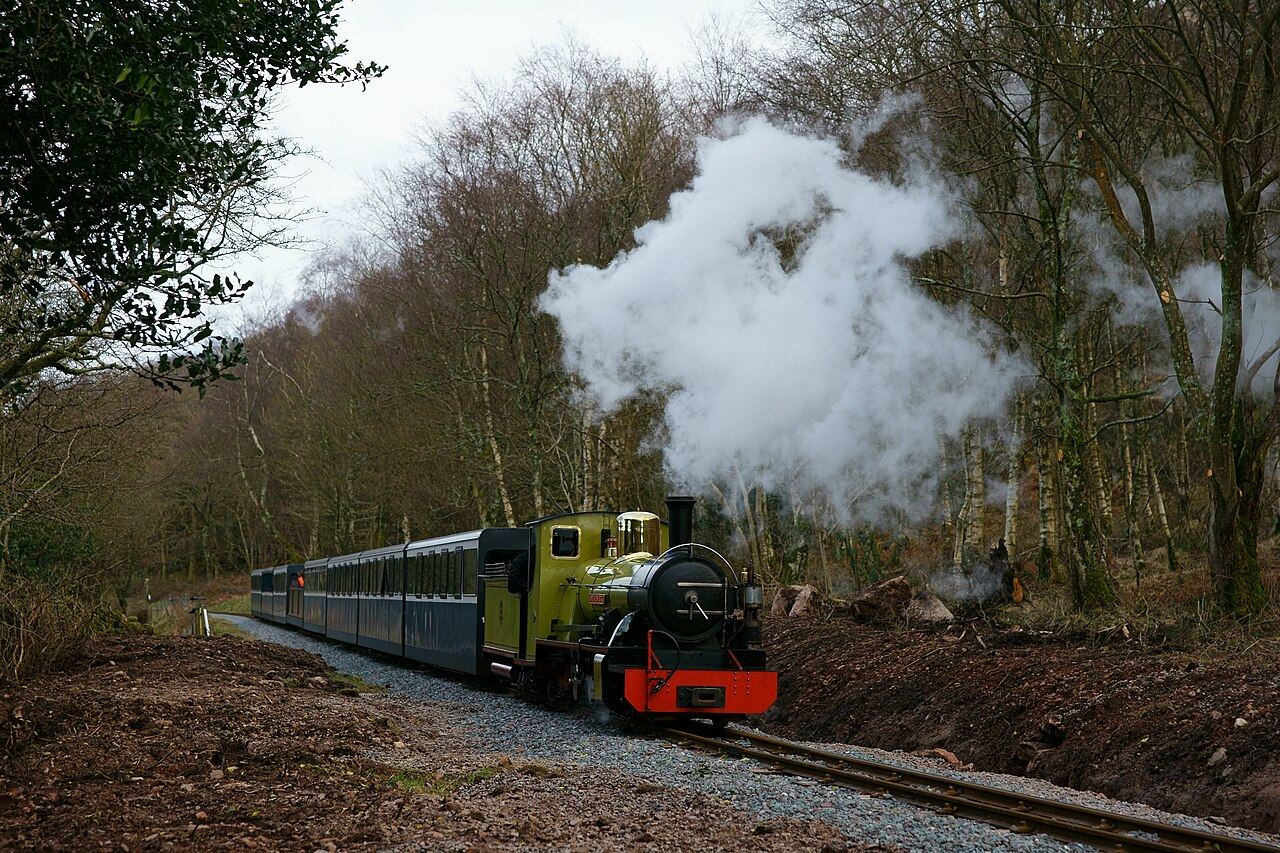
La'al Ratty, as everyone calls it, is a 15 inch gauge railway that runs about seven miles from Ravenglass up Eskdale to Dalegarth for Boot. A single journey takes about 40 minutes, and you choose open, semi open or enclosed carriages when you book. In late October the open carriages are for the brave and the well wrapped (children will insist on them, then spend the ride inside your coat).
Both ends have a cafe, a gift shop, a turntable to watch the engines turn and a play area, though the Ravenglass one was marked as under refurbishment when we checked. The small railway museum at Ravenglass station is free (donations welcome) and opens whenever trains are running, which includes most winter weekends and Christmas to New Year. After the late October storms the railway posted a reduced timetable on its site, with the last train leaving Ravenglass at 13:50, so look at the timetable page on the morning you go.
Coming up: Halloween half term activities until 1 November, the Santa Express on weekends from 21 November and daily from 19 to 24 December (storytelling with the Head Elf in the museum, the steam train to Dalegarth, Santa in the grotto and a present for each child; tickets were not yet on sale when we checked), and Winter Warmer trains from 28 December to 3 January with a mince pie for full fare passengers.
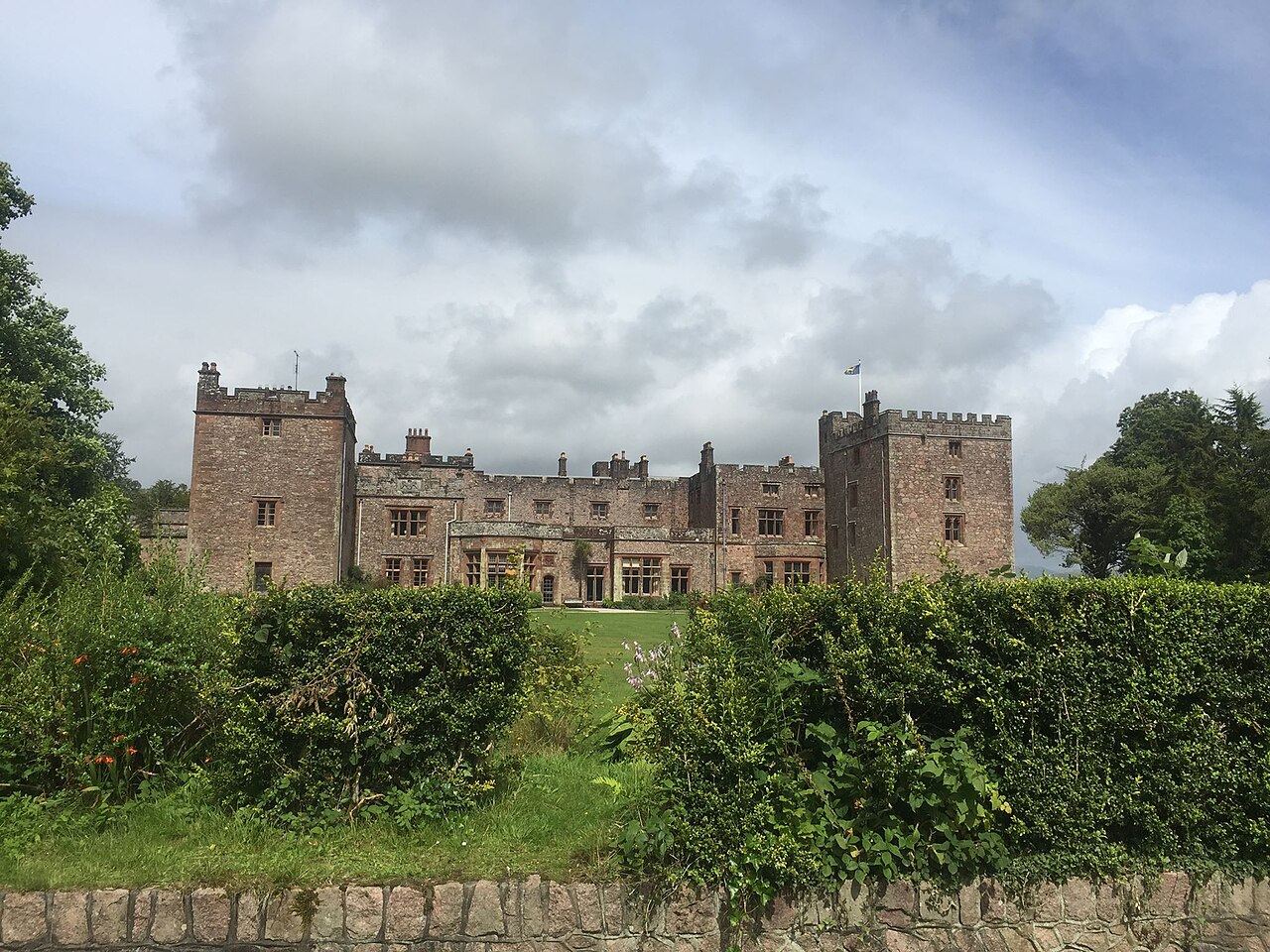
Muncaster has been home to the Pennington family for more than 800 years, it is famously haunted, and it has a Hawk and Owl Centre with flying displays in the main season. The gardens cover more than 70 acres of wild woodland with over six miles of paths, so legs that claim to be too tired for a walk will somehow find the energy to run between the owl aviaries. John Ruskin called the view up Eskdale towards England's highest mountain "Heaven's Gate", and on a clear day it is hard to argue with him.
There is an Enchanted Trail, a meadow maze and play areas for younger ones, and a Weapons Hall with archery, axe throwing and crossbow for older children and the grown-ups who have been waiting all year for a legitimate reason to throw an axe. Dogs are welcome on a lead in the gardens.
Winter is quieter: Muncaster's own site says it is open weekends only until 20 March, then seven days a week for the main season from 21 March. The Halloween Family Festival runs until 1 November, Scarecaster evening sessions run 29 to 31 October, and there is an evening talk, Cumbria: 1,000 Years of Maps, on 24 November.
The bath house walls stand almost four metres high, and English Heritage describes them as among the tallest Roman structures surviving in northern Britain. It belonged to the Roman fort at Ravenglass, once an important Roman port, and the village marks the end of the Frontiers of the Roman Empire World Heritage Site that starts with Hadrian's Wall.
It takes about ten minutes to look round, which is roughly the attention span of a seven year old for anything without a gift shop, so pair it with the railway or the castle.
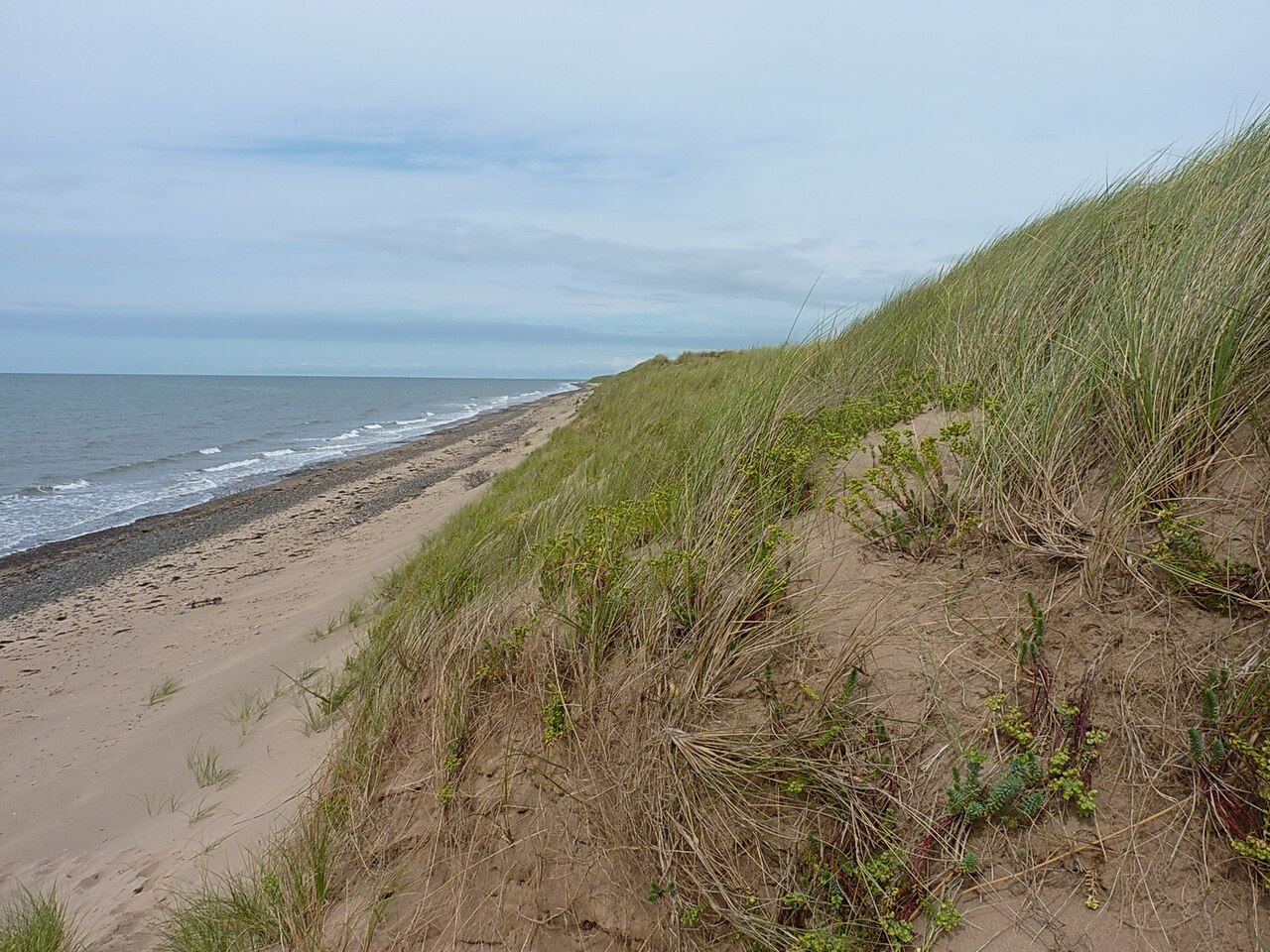
This is the walk most visitors miss. From Ravenglass station you cross the River Mite on the footbridge by the railway viaduct, pass the old packhorse bridge at Holme Bridge and head out to Drigg, where the dunes are the largest dune system in Cumbria and the beach is almost endless at low tide. The Drigg coast has been a Special Area of Conservation since 1996, and the dunes are part of why. Countryfile's route finishes at Drigg station so you can catch the Cumbrian Coast Line train back to Ravenglass, which children treat as a reward and grown-ups treat as a relief.
The Ravenglass end is an estuary, not a seaside beach: three rivers meet here and the tide comes in over wide sands. Stick to the route, keep away from the channels, and check the tide times before you set off.
Get off La'al Ratty at Dalegarth and you are at the bottom of one of the prettiest valleys in the county, with the fells closing in and the river doing its best to look like a postcard. The short walks from here are why people come back.
Stanley Ghyll Force drops about 20 metres into a deep, mossy gorge, and the path up to it crosses the stream on several footbridges through woodland that looks like it has been arranged by a set designer. It was once called Dalegarth Falls, until a member of the Stanley family at Dalegarth Hall gave it their name.
The usual start is the car park beside Dalegarth Hall, about half a mile from the falls. You can also walk in from Boot past St Catherine's Church, crossing the Esk on the stepping stones when the river is low, or on a footbridge a little upstream when it is not. Hold small hands near the gorge edges, which are steep.
Over a narrow packhorse bridge in Boot village sits a water mill run by a charity, and 2026 marks 50 years since it first opened to the public. There is an interactive model waterwheel outside that children can work themselves (expect wet sleeves), cascades, restored gardens, a meadow, a nature trail, picnic benches and handmade ice cream.
The catch in winter is opening: from November to the end of March it only opens on selected school holiday days, from 11am to 3.30pm, so ring before you go. In season (April to October) it opens Sunday to Thursday.
Our pick for small legs. This two mile loop from Dalegarth station is flat, takes about an hour and a half at a dawdle, and goes along a walled track called Parson's Passage to St Catherine's Church, which sits right on the bank of the Esk with the fells behind it. The church is open daily from dawn to dusk, has level access and is dog friendly, and inside is an octagonal font carved with marigold patterns.
From the church a stone slabbed path follows the river to Gill Force and a girder bridge, a spot the local walk guide describes as a favourite with children for basking on rocks and paddling when the river is not too high. In November, paddling is for the dog only. The route comes back along an old railway path to the station, so there is very little chance of anyone uttering the phrase "only ten more minutes" more than twice.
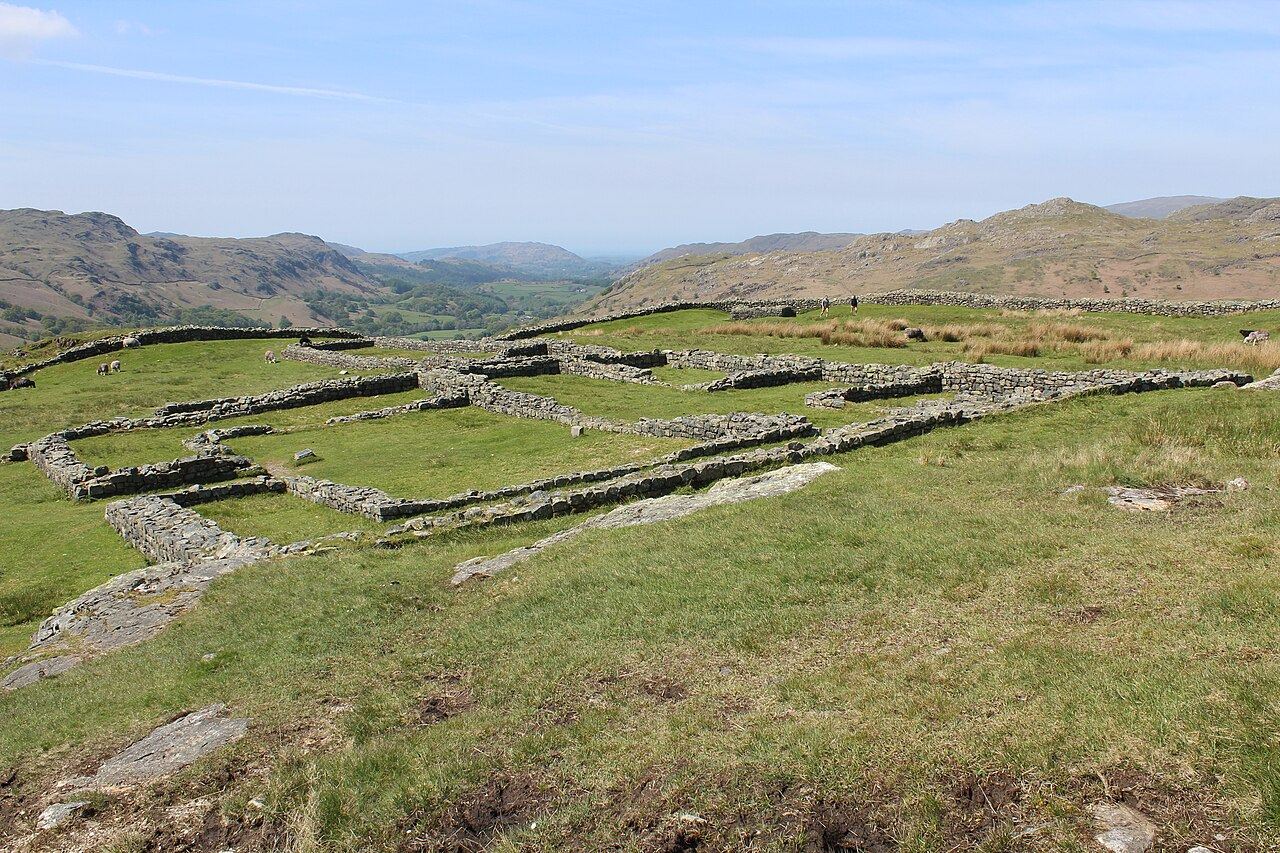
Founded under Hadrian in the second century, Hardknott fort sits on a shelf above the top of Eskdale with a huge view down the valley. You can trace the headquarters building, the commandant's house and the bath house, and the levelled parade ground is still there next to the fort. Children can work out where the soldiers slept and why they probably complained about the weather (some things never change).
The road to it is the problem. Hardknott Pass is narrow and very steep, and English Heritage warns it can be hazardous in bad weather. There is a small parking area near the fort, just off the pass.
Wasdale is reached by a single track road from Gosforth, off the A595, and it feels like the end of the world in the best possible way. Wastwater is the deepest lake in England at 79 metres (258 feet), it is about three miles long, and its far shore is the Wastwater Screes, a wall of rock and scree about 600 metres high. In 2007 ITV viewers voted it Britain's Favourite View, and the National Trust looks after it.
Mobile signal is patchy up the valley, so set up your parking app at home, put the postcode in before you lose bars, and pack the sandwiches before you set off. Then check you packed the sandwiches. (My own record on this is not spotless.)
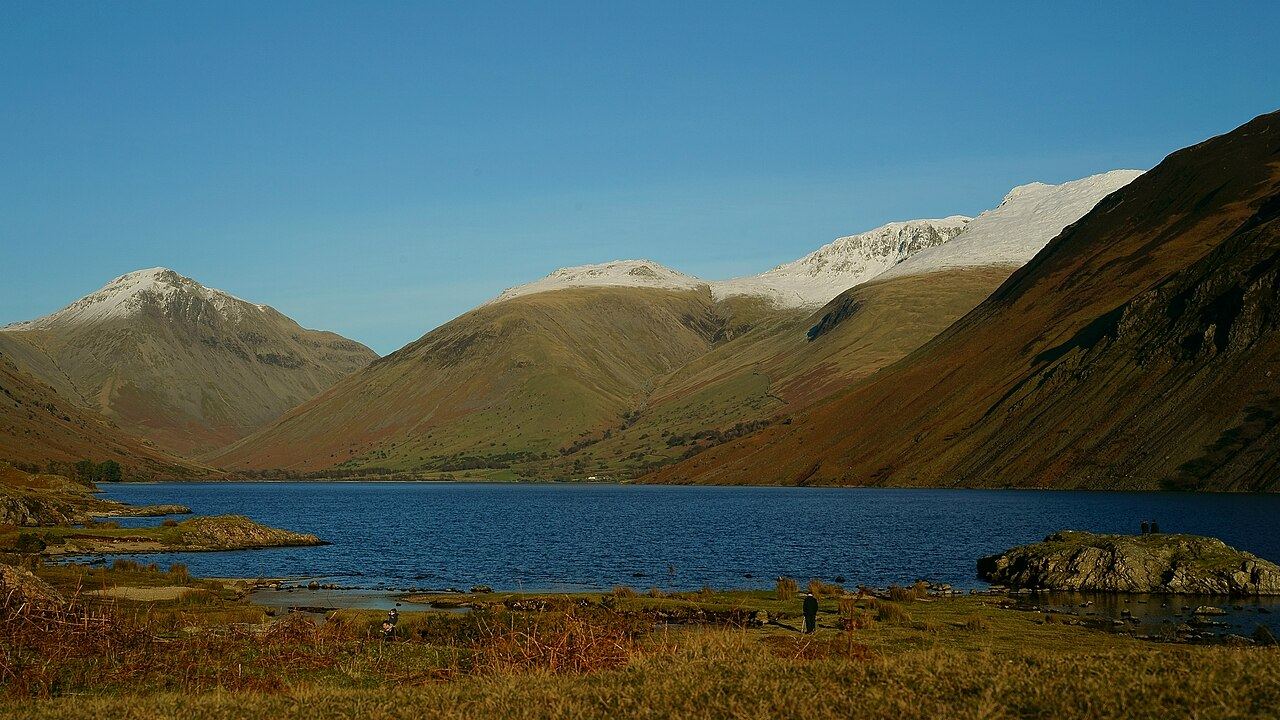
You do not need to climb anything here. The road runs along the northern side of the lake towards Wasdale Head, with the screes across the water and Great Gable, Lingmell and Scafell Pike around the head of the valley, so the view comes to you. A picnic in the car with the heater on is a perfectly respectable Wasdale tradition when the weather has other ideas.
Can you walk around Wastwater? Yes, but it is about eight miles, and the southern side follows the Screes path, which the tourist board describes as very difficult and rough terrain. With children, walk a short stretch from one of the car parks and turn back while everyone is still smiling. The water is very deep and very cold, so this is a lake for looking at rather than paddling in, especially in autumn and winter.
Out in the fields at Wasdale Head, St Olaf's is often described as England's smallest parish church. It is Grade II listed, it was dedicated to St Olaf in 1977, and it has long been linked with British climbers: the south window carries a small etching of Napes Needle on Great Gable. It takes five minutes to see.
It is in the same hamlet as the Wasdale Head Inn, which has been serving walkers for more than 200 years, so the full expedition is church, view, pub, car. It is a working church with services, so visit quietly.
For teenagers and grown-ups, this is the most memorable thing on this list. Path to Adventure runs guided Friday evening canoe trips on Wastwater: a practice paddle in daylight, a hot drink in a sheltered bay, stargazing (with apps on cloudy nights, because the Lake District does not do cloudless on request) and glow sticks for the paddle back. Sessions are listed from 6 November (15:45 to 18:45) and from 20 November (15:30 to 18:30).
It is for ages 14 and over, so the six and seven year olds stay home with a grandparent and a film.
On the way in or out of Wasdale, this cafe sits on the bank of the River Irt in Nether Wasdale and does breakfast, brunch, lunch and afternoon tea, with vegetarian, vegan and gluten free options. The bit that matters to parents: there is an indoor children's play area and baby changing, dogs are welcome inside, parking is free and you do not need to book.
Between Ravenglass and Wasdale are two of the most important early medieval carved crosses in England, both standing in ordinary village churchyards with no ticket office, no queue and usually nobody else there.
In St Mary's churchyard in Gosforth stands a slim Viking cross about 4.4 metres (14 feet) tall, carved in the first half of the tenth century. It mixes Norse myth and Christian story: Vidar tearing open the jaws of the wolf Fenrir, Loki bound with his wife Sigyn shielding him, Heimdall with his horn, and a Crucifixion scene.
Inside the church are two Viking hogback tombstones carved with battle scenes and the Fishing Stone, and Pevsner called the church's collection the richest haul in the country of Anglo-Saxon and Anglo-Danish work. The church has no regular opening times, but the cross is in the churchyard and you can see it any time.
Older than Gosforth by about a century, the Irton Cross is an Anglo-Saxon cross from the early ninth century in the churchyard of St Paul's Church, Irton, just south of the church. Its panels are carved with interlace, key patterns, chequers and a scroll of leaves and fruit, and the graveyard is open to the public so you can see it at any time. It is in the parish of Irton with Santon, a quiet spot and the sort of place you only find if somebody tells you about it. Consider yourselves told.
Winter days are short here: the light goes before half past four in November, and the valley roads are dark and narrow. Plan for the main thing to be done by mid afternoon, and leave the long walks for spring.
By train, the Cumbrian Coast Line stops at Ravenglass and at Drigg, so you can do the railway, the Romans and the dunes without a car. By car, come in on the A595 and reach Eskdale via Gosforth and Holmrook or over Birker Fell from Ulpha, which is what Eskdale Mill advises; avoid Wrynose and Hardknott from the east. Parking is pay and display at the two railway stations and in Ravenglass village, and the National Trust charges at Wastwater are set out above. In summer a free shuttle bus has run between Ravenglass and Wasdale Head (from 18 April to 21 September this year), so if you are reading this in spring, look for it again.
Toilets, the eternal parental quest, are at both railway stations, at Muncaster, at Lake Head car park and Wasdale Head, and very few other places, so plan the route around them like a general planning supply lines.
See what's on in The Cumbrian AlmanacFree, and you choose: the family weekend edition on Friday mornings, the grown-up Sunday edition on Sunday evenings, or both.
No spam, no ads. Unsubscribe from any email with one click. Privacy
The Ravenglass and Eskdale Railway, Muncaster Castle with its Hawk and Owl Centre, the Roman bath house (free) and the Drigg dunes walk along the estuary. Ravenglass is also the starting point for days out in Eskdale and Wasdale.
An adult return is £26, a child (5 to 17) return is £16 and under 5s travel free, at the time of writing. A family pass for two adults and two children for all 2026 scheduled trains is £150, and dogs are £5 for the day.
About 40 minutes each way on the seven mile line. Allow at least three hours for a return trip with a walk at Dalegarth.
Muncaster's website says it is open at weekends only until 20 March, then seven days a week from 21 March. Check the website for the day's times and prices before travelling.
Yes, it is about eight miles, but the southern side follows the Screes path, which is very rough and difficult. With children, walk part of the north shore instead.
Yes. Wastwater is 79 metres (258 feet) deep, the deepest lake in England, and about three miles long.
The National Trust car parks at Lake Head (with toilets) and Overbeck are pay and display, from £7 for two hours, and National Trust members park free. Nether Wasdale has a donation box.
It is a very steep, narrow pass that English Heritage warns can be hazardous in bad weather. With children or in winter, reach Eskdale via the A595 and Holmrook or over Birker Fell instead.
Facts checked against these pages on Thursday 29 October 2026. Opening times and prices change, so confirm with the venue.