Things to Do in Alston: England's Highest Market Town
Cobbles, a narrow gauge steam railway, a lead mine you can walk into and a waterfall you can walk behind, all in a town that sits 1,000 feet up and keeps its parking free.

Cobbles, a narrow gauge steam railway, a lead mine you can walk into and a waterfall you can walk behind, all in a town that sits 1,000 feet up and keeps its parking free.
The top things to do in Alston are walking the cobbled Front Street, riding the South Tynedale Railway (Rover tickets £16 adults, £8 children), visiting Nenthead Mines and walking behind Ashgill Force near Garrigill. In winter, regular trains and mine trips stop, but the railway's Santa Specials run on 12, 13, 18, 19 and 20 December 2026. Parking in Alston is free.
Checked 4 November 2026. Train days, opening seasons and event dates change, so the official link on each place is the one to trust.
If you are looking up things to do in Alston, here is the honest version: walk up the cobbles of Front Street, ride the little steam railway, go underground at Nenthead Mines and stand behind a waterfall at Ashgill Force. None of it involves a queue for a car park. Alston sits about 1,000 feet up in the North Pennines (Visit Lake District puts it at 1,043 ft, or 318 m), and it calls itself England's highest market town. Buxton in Derbyshire claims the same title, so the two towns share it, which is a very English way of settling an argument.
It is the far north east corner of Cumbria, about 20 miles from Penrith over Hartside, and it feels a long way from the Lake District crowds. That is the point. The fells here are big, bare and brown, the villages are built from grey stone by people who mined lead for a living, and the sky at night is properly dark. The North Pennines is a National Landscape and a UNESCO Global Geopark, which is the official way of saying the rocks are interesting and the views are very wide.
One warning before you set off in November. A lot of Alston's attractions are seasonal and run by volunteers, and early winter is their quiet time. The railway runs weekends from April to the end of October and then comes back for Santa in December. The underground mine trips stop from November to late March. The Hub museum closes at the end of October. So this guide tells you what is open right now, what is coming up for Christmas, and what to save for spring. Pack a hat. Alston in November is not the place to discover a coat has been left at home.
Alston has the knack of making a 300 m stroll up the high street feel like a mountain day. The cobbles are steep, the wind has opinions, and the reward at the top is a cafe. That is exactly the right order.
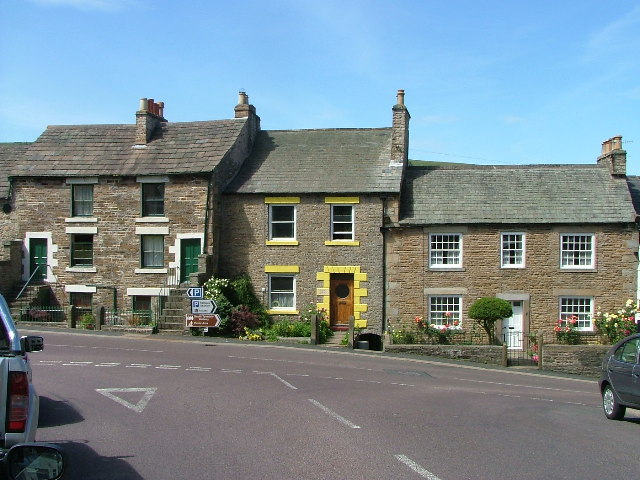
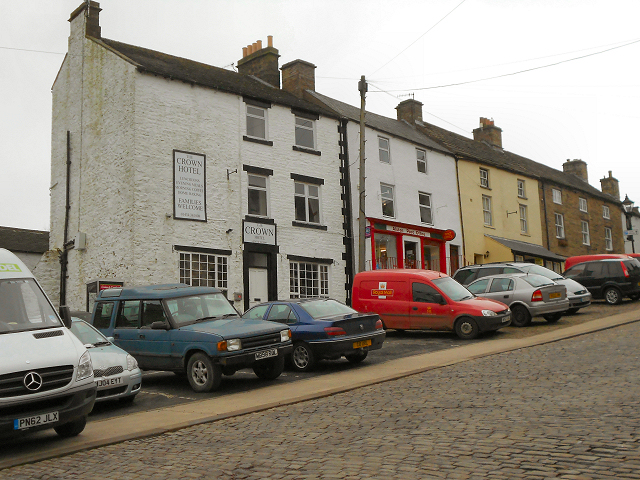
Front Street is the steep, partly cobbled main street that climbs through the middle of Alston, lined with 17th century stone buildings, small shops and courtyards tucked behind them. It is so photogenic that it stood in for a Victorian town in a 1997 television version of Jane Eyre. Walk it uphill first so you can freewheel back down to the car.
The Market Cross halfway up has had a hard life. According to its history, a cross of 1883 was knocked down by a lorry in 1968, its replacement was demolished by a wagon in January 1980, and the current one went up in 1981. Children find this hilarious. Drivers should find it instructive, because the street is narrow and steep and the cobbles are slippy in the wet.
There is no weekly market these days, although the town keeps the legal right to hold one, and a producers' market runs in the Town Hall from April to September. In November, it is a place for a wander, a hot drink and a look in the shop windows.
The tall spire you can see from everywhere in Alston belongs to St Augustine of Canterbury, a Grade II listed church built in 1870 with the steeple finished in 1886. It sits beside the cobbled main street, which gets steeper as it passes the churchyard (one more reason to do the hill on the way up, while legs are still fresh).
The reason to pop in is the clock. It belonged to the Earl of Derwentwater and dates from 1767, and the church also has a fine carillon. It is a short, free stop that gives a seven-year-old a fact to repeat all the way home, which is more than you can say for most gift shops.
There are no regular opening times, so treat a visit as a bonus if the door is open rather than the main event.
Alston station is just north of the town centre on the A686, and it is the base for the one attraction most visitors already know about.
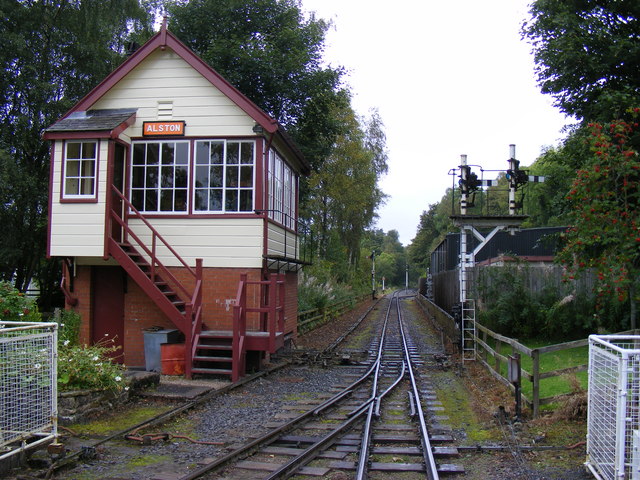
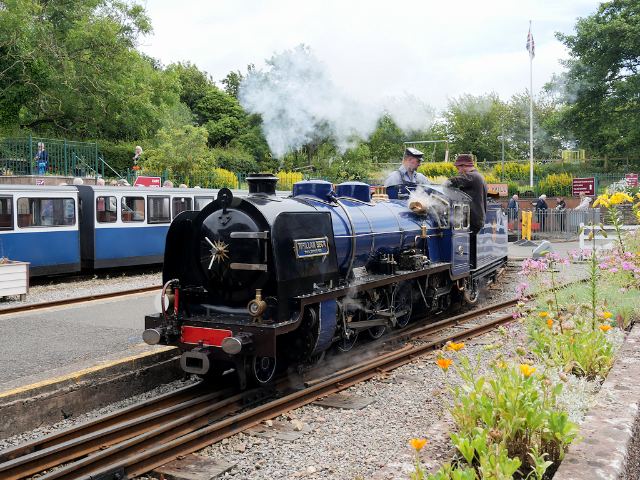
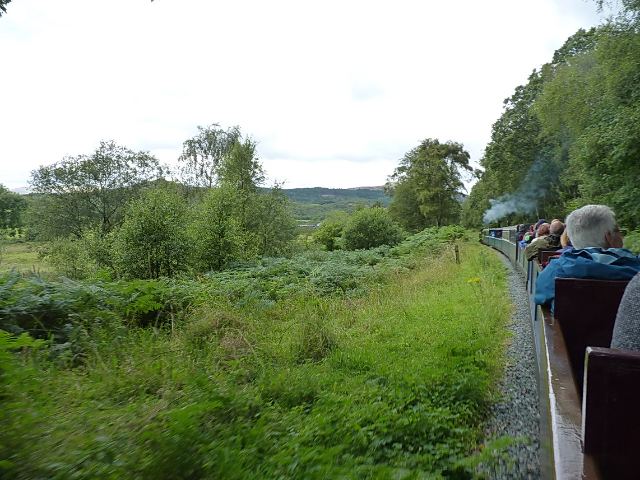
England's longest 2ft gauge heritage railway runs from Alston along the South Tyne valley to Slaggyford, with request stops at Kirkhaugh and Lintley. On the published timetable the trip takes 35 minutes each way, with trains leaving Alston at 10.30, 13.00 and 15.00. The railway aims to run steam whenever it can but cannot promise it, so tell the train-mad child it will definitely be a train, and leave it there.
The Rover ticket lets you travel all day, which is the one to buy if anyone in your party likes to ride the same line three times (you know who you are). Dogs ride free. There is a free car park big enough for coaches, accessible toilets and baby change at the station, ramps to the platforms, and a carriage with wheelchair access on every train. The Crossing Cafe on platform 1 does sandwiches, cakes and sausage rolls on running days.
The catch for a November visit: regular trains run at weekends and bank holidays from April to the end of October, plus some weekdays, and no passenger trains were listed for November 2026 when we checked. The next trains are the Santa Specials in December (see below).
Across the yard from the station, in the old goods shed, the Hub is a small volunteer museum of bygone transport and Alston Moor local history. It costs £4 a head and under-16s go free with an adult, which makes it a very cheap way to fill a wet hour.
It is a summer thing, though. The museum opens on Saturdays, Sundays and Tuesdays from mid April to the end of October, 11am to 4pm, so it is closed now. Put it on the list for a spring trip, when you can do the train and the museum on the same ticket to the car park.
The South Tynedale Railway's Santa Specials run on Saturday 12, Sunday 13, Friday 18, Saturday 19 and Sunday 20 December 2026, with trains at 10.30, 12.00 and 14.00. Your ticket includes a steam train ride, some festive nibbles for the journey, and a visit from Santa in your carriage with a gift for everyone aged 0 to 17. That last bit is worth reading twice if you have a teenager who claims to be too old for Santa, because they will not be too old for a present.
The booking page lists prices as "Free to £24" without breaking them down, so check the ticket type when you book. When we looked, the 10.30 train on Sunday 13 December was already sold out, which tells you how fast these go. Give the name and age of each child when you book, and if you are bringing the dog, it needs a ticket too. Our full round-up of festive trains across the county is in the Santa trains guide.
Nenthead is about four and a half miles up the A689 from Alston, high in the Nent valley. The whole valley was dug, washed and smelted for lead and zinc, and you can still read the landscape like a book once someone points out the chapters.
Nenthead Mines is a historic lead and zinc mining site owned and looked after by the Nenthead Mines Conservation Society, a charity run entirely by volunteers. Most of the valley is a Scheduled Ancient Monument, and the old mine dumps are home to rare lichens and plants, so stick to the paths.
The big draw is the trip into Carrs Mine: about 90 minutes underground with lamps and helmets, covering old mining methods, geology and fluorescent minerals. It is around 8C down there and can be a little muddy. Children who can walk and climb stairs are welcome, but babes in arms are not taken underground, and if your seven-year-old has only ever been in a cave at a theme park, this will blow their small socks off.
The timing matters. There are no Carrs Mine trips from November to late March while the volunteers maintain the mine, and the buildings only open on open days. The valley itself is open all year, so in winter it is an outdoor wander rather than a guided visit. Save the underground trip for spring.
Garrigill is a village on the River South Tyne a few miles south east of Alston, and it is the start for the best short walk in the area. There are play parks in Alston, Nenthead and Garrigill, which is useful to know for bribery purposes.
Ashgill Force is a waterfall in a wooded gorge, said to drop about 55 feet, and Visit Eden calls it the highest waterfall in the area. Here is the bit children love: there is a path that leads behind the falling water, along a broad ledge. You get the noise, the spray and the view out through the curtain of water, and you feel very brave for something that takes about four minutes.
There are two ways in. The short one is to park in the small stony lay-by just before the B6277 turns sharply right over Ashgill Bridge, about five miles from Alston's Market Cross, then follow the path about 120 m to the falls. The longer, nicer one is a 3 mile (4.8 km) walk from the centre of Garrigill along the river, with about 111 m of climbing, described as easy with uphill sections, and a return through sheep fields with stiles.
It is very slippy around the waterfall and on the ledge, so hold small hands, wear proper boots and skip it after heavy rain when the beck is roaring. The stiles mean it is not one for buggies.
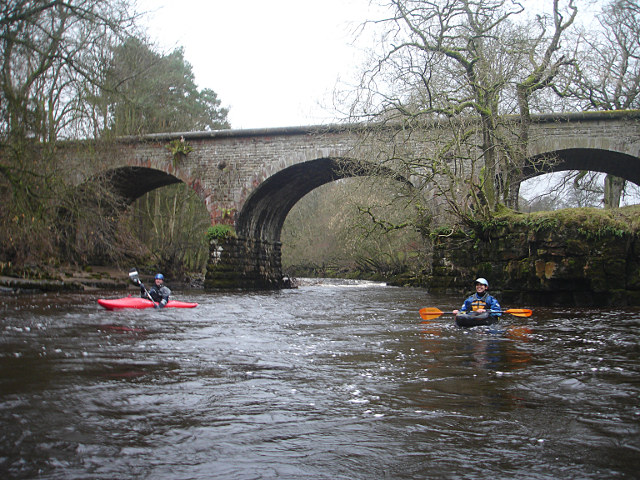
The South Tyne Trail follows the old railway line north from Alston, alongside the little trains and the river. In the summer the classic plan is to take the train out and walk the 5 miles (8 km) back to Alston, with only about 62 m of climbing. Where2walk calls it possibly the easiest walk you will ever do, which is the kind of review every parent wants to read.
In November, with no trains running, turn it into an out-and-back from Alston station: walk north for as long as legs and patience last, then turn round. Follow the line of the tracks, which cross to the western bank after the sewage works (the children will spot that landmark without your help).
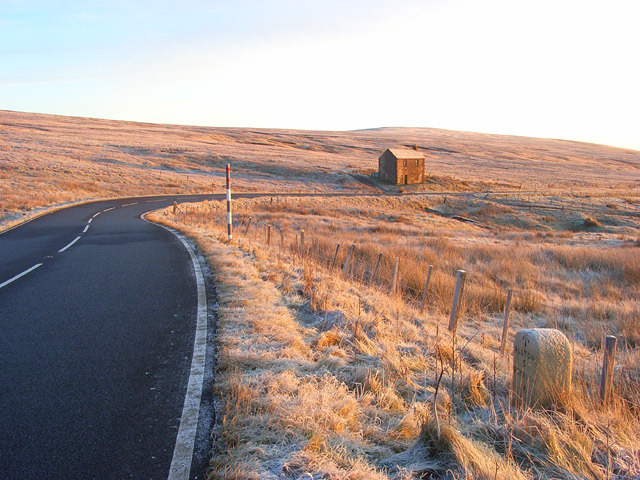
Most people arrive in Alston over Hartside, on the A686 from Penrith and Melmerby. The road climbs to about 580 m (1,900 ft) and the AA once named it one of the world's top ten scenic drives. On a clear day you look back over the Eden valley with layer after layer of hills fading towards the Lake District.
Two things to know. The famous cafe at the top burned down in March 2018 and has not been rebuilt: a rebuild was approved in 2024, but in late September 2026 the site was still rubble with no sign of work, so there is nothing to buy and no toilet at the top. Bring your own flask, and plan the wee stop for Alston or Penrith. Second, this is high, exposed road. It closes in snow, and the Helm Wind, Britain's only named wind, can roar off Cross Fell in late winter and spring. Check the forecast and road status before you set off, and if the car thermometer is dropping fast, the scenic drive can wait.
The North Pennines has some of the darkest skies in the country, and November evenings start so early you can see the stars before tea. The North Pennines Stargazing Festival ran from 16 October to 1 November this year, so the big programme has just finished, but you do not need an event to look up.
Alston Moor Golf Club, about two miles south of town on the Middleton road, opened its own observatory in October 2024. It hosts public stargazing evenings and visits by prior arrangement. The most recent public night, on 30 October 2026, was a talk followed by guided stargazing if the sky was clear, aimed at children over eight with an adult, at £12 for adults and £8 for children.
No winter dates were listed when we checked, so this is one to watch rather than one to book. If you go, dress as if you are going to stand still on a hill in the North Pennines in the dark, because you are.
Epiacum, the Roman fort also known as Whitley Castle, is a couple of miles north west of Alston near Castle Nook. It sits just inside Northumberland, so it is not strictly Cumbria, but it is the highest stone-built Roman fort in Britain, it is free to visit in daylight, and there is a car park and cafe below it off the A689. Pair it with our Hadrian's Wall guide if you have a Roman enthusiast in the back seat.
For a grown-up evening out, the Almanac has the Flying Thimbles, an acoustic folk trio from Alston, at Gamblesby Community Centre on Friday 13 November 2026 at 7.30pm. It is £10 including a home-made supper, booking is required, and the money goes to a community project in Renwick and Croglin. Gamblesby is on the Penrith side of Hartside, so it fits neatly on the drive home.
Looking further ahead, Alston Live, the town's independent music festival, is on Tynewillows Field on 16 and 17 July 2027.
Alston is about 20 miles from Penrith via Hartside on the A686, and the A689 links it to Brampton and Carlisle to the north west and Nenthead to the south east. Both are high roads, so check the weather and road updates before you go in winter. Parking in Alston is free: two small car parks on Front Street with about 10 spaces each, and a large free car park at the railway station. Public toilets are at the Town Hall on Front Street, and at the railway station when the trains are running.
Alston Local Links, the tourist information point in the Town Hall, sells maps and is the place to ask what is open that day, which in early winter is a very sensible question.
See what's on in The Cumbrian AlmanacFree, and you choose: the family weekend edition on Friday mornings, the grown-up Sunday edition on Sunday evenings, or both.
No spam, no ads. Unsubscribe from any email with one click. Privacy
Yes, for a quiet day out. It has a steep cobbled main street, the South Tynedale Railway, Nenthead Mines and Ashgill Force nearby, and free parking, with far fewer visitors than the central Lake District.
Alston calls itself England's highest market town at about 1,000 feet (318 m), and shares the title with Buxton in Derbyshire.
No regular passenger trains were listed for November 2026. Trains run at weekends and bank holidays from April to October, and the Santa Specials run on 12, 13, 18, 19 and 20 December 2026.
A Rover ticket, valid all day between Alston and Slaggyford, costs £16 for adults and £8 for children aged 3 to 17. Under 3s and dogs travel free.
Yes. A path leads onto a ledge behind the waterfall near Garrigill, but it is wet and slippy, so wear boots, hold children's hands and avoid it after heavy rain.
Yes, and it is free. There are two small car parks on Front Street with about 10 spaces each and a large free car park at the railway station.
No. The cafe at the top of Hartside burned down in March 2018 and had not been rebuilt when checked in late September 2026, so there are no facilities on the pass.
Facts checked against these pages on Wednesday 4 November 2026. Opening times and prices change, so confirm with the venue.