What to Eat in Cumbria: Traditional Food and Where It Came From
Cumbrian food is mostly sugar, pork and lamb, all of it argued over. Here is what to try, where it comes from, and which origin stories to take with a pinch of salt.

Cumbrian food is mostly sugar, pork and lamb, all of it argued over. Here is what to try, where it comes from, and which origin stories to take with a pinch of salt.
If you only try a handful of things in Cumbria, make it Cumberland sausage (a protected coil of chunky, peppery pork), Grasmere Gingerbread, Kendal Mint Cake, Morecambe Bay potted shrimps and a sticky toffee pudding from Cartmel. Add Herdwick lamb, rum butter and a proper damson anything if you are here at the right time of year.
People ask what to eat in Cumbria and expect me to say something refined with foam on it. I'm from Carlisle, so I'm going to say sausage. Then sugar. Then more sugar. This is a county that feeds hikers, so the traditional food is heavy on things you can carry in a pocket or eat with a spoon after four hours of rain, and it has a habit of getting very heated about who invented what.
Below is the proper list, with the bits of history I could actually check and a note where the story is more legend than record. Where a dish has a place you can go and buy it, I've put a link to the maker's own site.
Real Cumberland sausage is a coil. Not links, not a string of sad little cocktail sausages, a single fat rope of chopped pork that you buy by the length and then fight into a frying pan. It got Protected Geographical Indication status on 18 March 2011, which means anything sold as Traditional Cumberland Sausage has to be produced, processed and prepared in Cumbria, contain at least 80 per cent meat, and be at least 20 millimetres thick so it keeps that coarse, chunky texture (the government announcement sets all of this out).
The seasoning is peppery rather than sweet. Wikipedia lists the usual suspects as pepper, thyme, sage, nutmeg and cayenne, with some rusk to bind it. As for where it came from, the honest answer is nobody knows for sure. A commonly repeated story credits German miners working in the Lakes in the sixteenth century, and Visit Keswick notes it was only first officially documented in 1911, so treat the miners as a nice theory. The spices very probably arrived through the port of Whitehaven, which we will come back to.
My advice is to buy from a proper butcher who will cut you a length, and to check for the PGI label, because plenty of things called Cumberland sausage in supermarkets are thin links with a lot less meat in them. Mash and onion gravy is the correct serving.
Nobody agrees on who invented sticky toffee pudding, and I find that very restful. The Lake District claim usually points to Sharrow Bay on Ullswater, where Francis Coulson and Robert Lee are credited with popularising it in the 1970s. Other places claim earlier, including a Yorkshire inn that says 1907 and a hotel in Aberdeenshire that says the 1960s, according to Wikipedia's rundown of the competing stories.
What is much better documented is the take-home version. Wikipedia records that a packaged sticky toffee pudding was developed in 1989 by the owners of the village shop in Cartmel, and that by the late 1990s it was in supermarkets across the country. That is the reason Cartmel gets called the home of sticky toffee, which is a slightly different claim from inventing it, and I think the shop is quite sensible not to fuss about the difference.
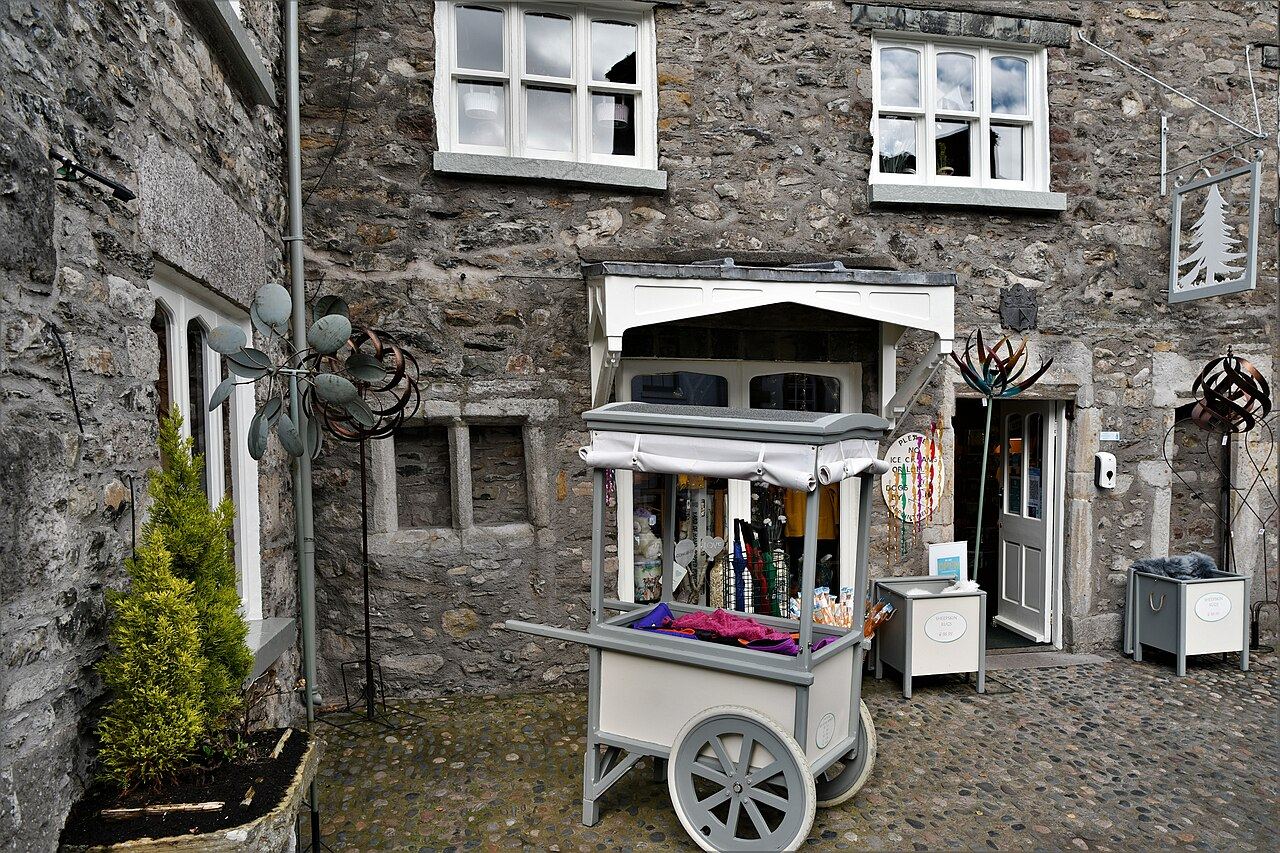
The shop says it started baking sticky toffee puddings in the back kitchen of the village shop and moved to a bigger kitchen as demand grew. The puddings now turn up in Booths, Waitrose and Fortnum & Mason, so you don't have to come to Cartmel to eat one, but it's a lovely village and it would be daft not to.
They also do crumbles, other puddings and sauces. If you are staying somewhere with a kitchen, a pudding to reheat is a very good holiday supper indeed.
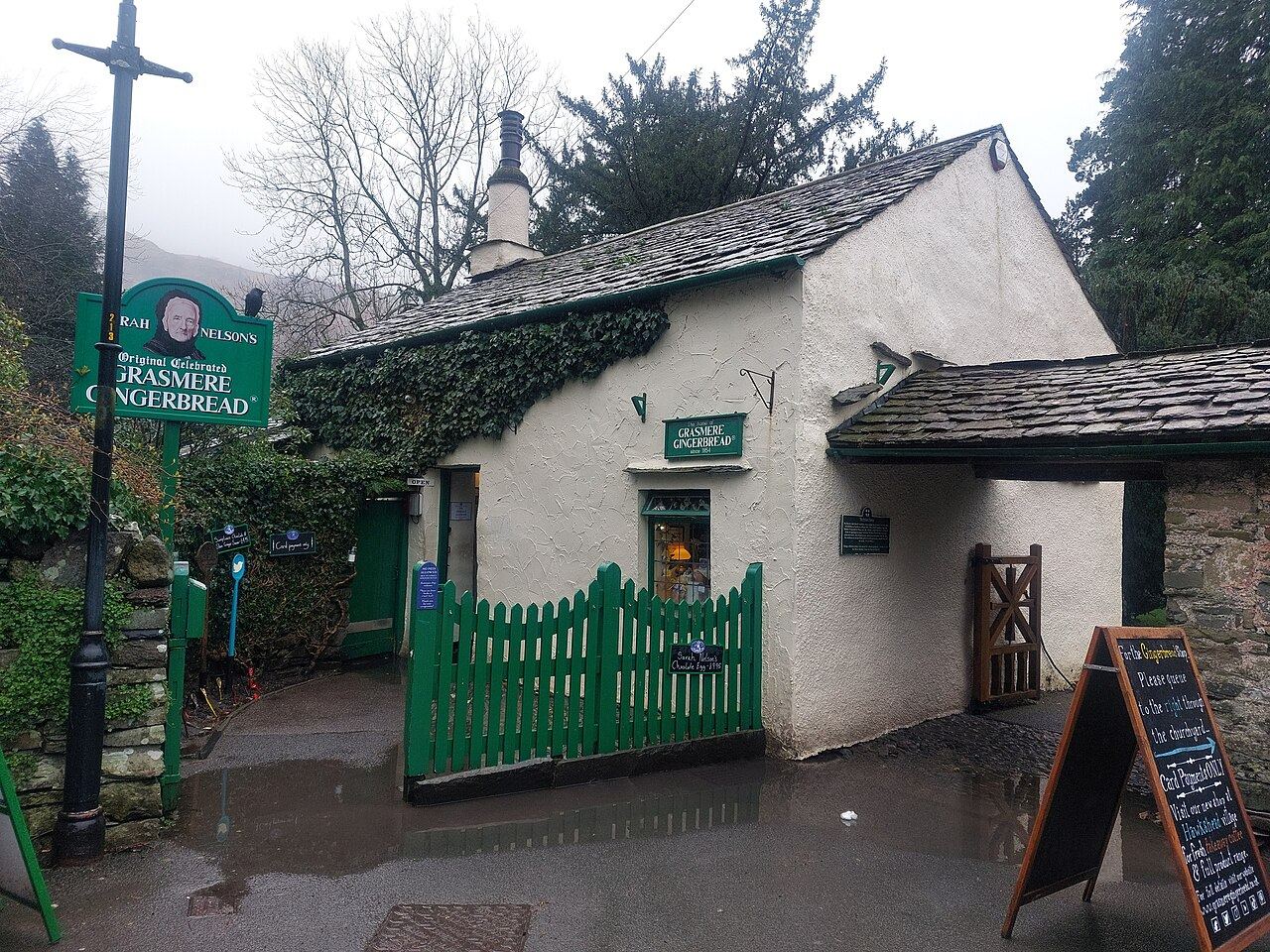
Sarah Nelson, born Sarah Kemp in Bowness, started making Grasmere Gingerbread in the winter of 1854, according to the shop's own history. The shop describes it as neither biscuit nor cake but somewhere in between, which is exactly what a Cumbrian would say to avoid taking a side. It's chewy, gingery and crumbly at the edges, and it comes in a paper wrapper that people keep on the mantelpiece for no good reason.
The shop is in Church Cottage, next to St Oswald's churchyard, which was built as a village school in 1630. The recipe is the famous secret, and the story goes that Sarah kept the handwritten version in a local bank vault. I can't verify the vault, but the trademark line, None Genuine Without Trademark, is on the wrapper for a reason.
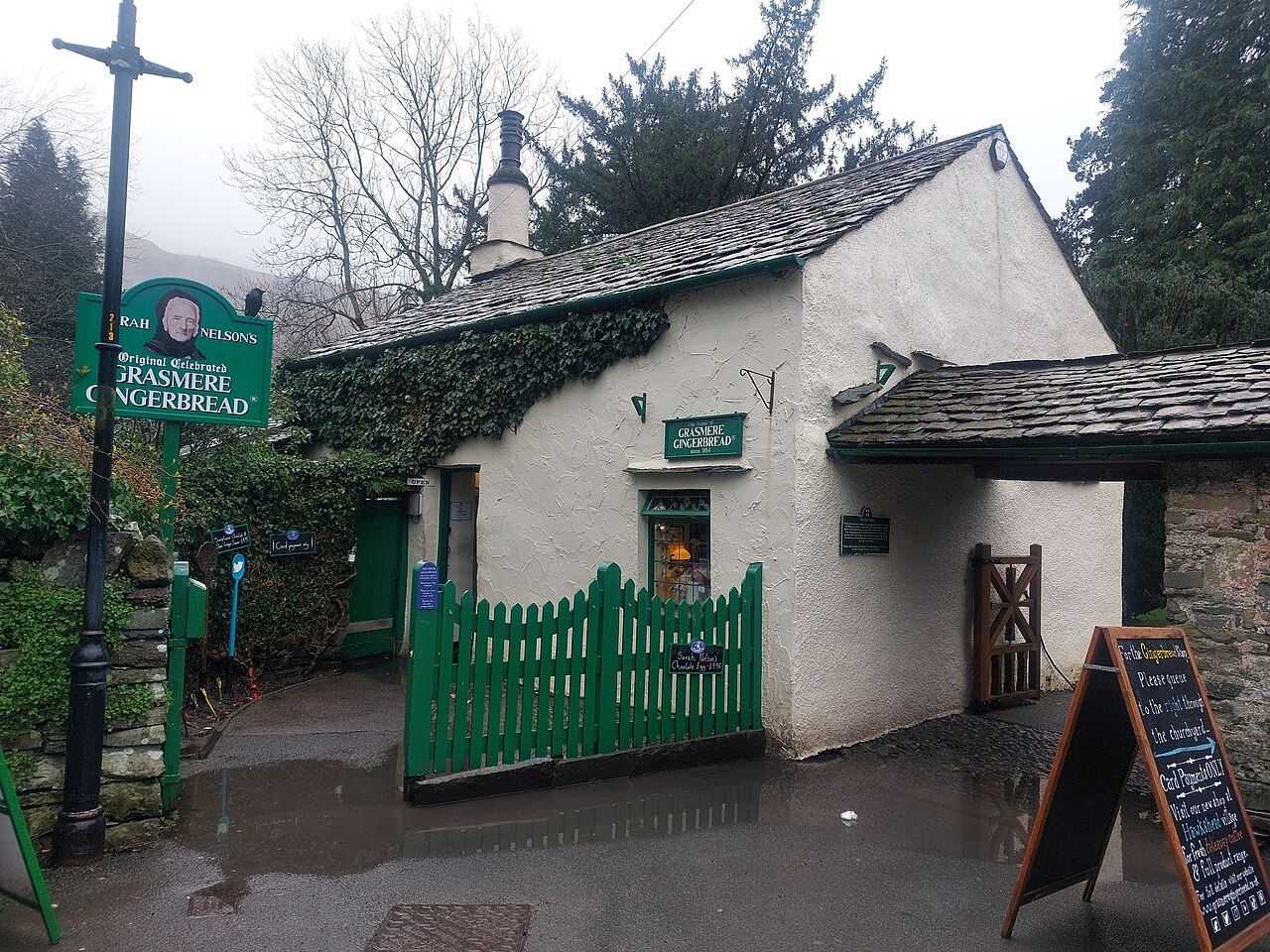
It's tiny. The shop's own page says to take your rucksack off before you go in because of the lack of space, and that it is card payments only. On a busy summer weekend it would be sensible to expect a queue, because a shop that small has no other option.
As well as the gingerbread they sell rum butter, toffee, fudge, conserves and Kendal Mint Cake, so you can do a fair chunk of your souvenir shopping in one go.
The popular story is that Joseph Wiper, a Kendal confectioner, made the first Kendal Mint Cake in 1869 by accident. He let a batch of glacier mint mixture boil for too long, saved it with peppermint oil, and ended up with a creamy white slab. That's the version on most wrappers. The Cumbria County History Trust points out that mint cake looks older than that, with a Kendal court case in 1853 about the theft of a quantity of mint cakes and hints of it being around in the 1810s. So Wiper may have made it famous rather than made it up.
The mountaineering credentials are properly well documented. Romney's says its brown mint cake was carried to the summit of Everest on 29 May 1953 by Edmund Hillary and Tenzing Norgay, and that the request arrived in November 1952 and needed special permission from the Ministry of Food to get the sugar during rationing. Robert Wiper, a great-nephew of Joseph, is recorded as supplying Shackleton's expedition of 1914 to 1917.
It is four ingredients, sugar, glucose, water and peppermint oil. It's also, I'll say it, just a lump of sugar with a minty attitude. Eat a square on a wet fell at 2pm and you'll understand. Eat it in the car and you'll feel slightly sick. Romney's is at Mintsfeet Industrial Estate in Kendal (LA9 6NA), and the other historic makers still going are Quiggin's and, under a different owner now, Wilson's. Every gift shop in the Lakes sells it.
Tiny brown shrimps, cooked, packed into clarified butter with pepper and other seasoning, and eaten cold on toast or brown bread. They've been caught in the bay since at least the sixteenth century, and in Flookburgh they're still caught with a tractor dragging a net across the sands, where boats and horses and carts once did the job. The bay is a genuinely dangerous place to wander onto the sand, so nobody should be copying this without a local guide.
Baxters says it has been producing Morecambe Bay potted shrimps since 1880, has held a Royal Warrant since 1967 and is on its seventh generation of the family. The address is Moor Lane, Flookburgh, LA11 7LS.
They sell in 50g, 100g and 200g pots, alongside smoked salmon and game. The opening hours on the website at the time of writing are Monday to Friday, 9am to 3pm, so this is a weekday stop, and worth a phone call first on 01524 410910.
I would not force these on a six-year-old. A pot of shrimps is essentially a tiny amount of seafood in a lot of butter, and the person who wants them is you. Buy them anyway.
Herdwicks are the grey, scruffy sheep of the high fells, and Lakeland Herdwick has had Protected Designation of Origin status since 2012. The Herdwick Sheep Breeders Association says the meat has to come from pure-bred Herdwick ewes and rams born, raised and slaughtered in Cumbria, processed through one family abattoir. It isn't cheap, because the sheep live on bare fell and there aren't many of them. The flavour is stronger and more gamey than supermarket lamb, and if you see Herdwick mutton on a pub menu, that's the older animal and it's the one that really tastes of something.
Whitehaven was one of the biggest ports in England in the eighteenth century, and rum, sugar, ginger and dried fruit came in through it. That's the reason a corner of a cold, wet county has a pudding cupboard full of tropical things. Rum butter (butter, brown sugar, rum, spice) is the classic, traditionally given at christenings with a silver coin in it according to Visit Keswick, and it ends up on Christmas pudding, gingerbread and, sensibly, a spoon.
Cumberland rum nicky is a shortcrust tart filled with dates, stem ginger, rum and brown sugar, often with a lattice top. Nobody knows the exact origin. Wikipedia quotes the food writer Andrew Webb placing it around the height of the region's trade in the 1800s, and the name probably comes from nicking the pastry with a knife, although that's a guess too. It is very sweet and very rich.
Redcurrant jelly, port, mustard, orange peel. It's cold, it goes with ham and game and it is the sort of thing you get with a pork pie in a fancy deli. The name is disputed. It might be from a Duke of Cumberland (Ernest Augustus of Hanover is one suggestion), or it might simply be from the county. Local newspapers were advertising bottled Cumberland sauce in the 1850s. Elizabeth David found it odd that no nineteenth-century cookbook mentions it by name, so if anyone tells you they know exactly where it came from, they're guessing.
This is where I start to get defensive. Tatie pot, also called Cumberland or Westmorland hotpot, is a slow-cooked stew of beef, lamb, often black pudding, split peas or pulses, onions and floury potatoes cut into chunky quarters. Lancashire hotpot has neat overlapping slices of potato on top, and this doesn't. The British Food History write-up notes it is one of the few traditional British dishes to mix different meats together. Jane Grigson helped get it into print in English Food, taking the recipe from a Mrs Burrows.
It's a very good thing to eat after a soaking wet fell walk, and I'd be surprised to see it on many menus, so if you find it in a pub, order it. If a pub tells you tatie pot is a Lancashire hotpot, nod politely and get a pudding.
The Lyth Valley south of Windermere is damson country. The Westmorland Damson Association says commercial growing in Westmorland goes back to at least the early 1700s, that about 250 tons were sold in 1938, and that the blossom was so good that charabancs came from all over Lancashire to drive through the valley on Damson Sunday. Its Damson Day is held in April at the County Showground in Kendal, and the fruit itself is ready late summer into autumn. Damson gin, damson jam and damson pies are the obvious products. It's a tart fruit, and sugar does most of the talking.
Borrowdale tea bread is a dark, fruity loaf made by soaking dried fruit in tea before baking, first documented in the 1800s according to Visit Keswick, and it's one of those things that is best sliced thickly with butter.
The rule in Cumbria is that any food with a good story has at least three people claiming it, and none of them has receipts.
Free, and you choose: the family weekend edition on Friday mornings, the grown-up Sunday edition on Sunday evenings, or both.
No spam, no ads. Unsubscribe from any email with one click. Privacy
Cumberland sausage, which has Protected Geographical Indication status, is probably the best known. Kendal Mint Cake, Grasmere Gingerbread and sticky toffee pudding are the other big three.
To be sold as Traditional Cumberland Sausage it must be produced in Cumbria, be at least 80 per cent meat, be at least 20mm thick and be sold in a long coil. It got PGI status on 18 March 2011.
The popular story credits Joseph Wiper in 1869, who supposedly made it by accident. However, historians have found references to mint cake in Kendal before then, so the accident story is probably legend.
Neither, according to the shop, which describes it as somewhere in between. It's chewy and gingery and has been made in Grasmere since 1854.
Yes. Lakeland Herdwick has had Protected Designation of Origin status since 2012 and must come from pure-bred Herdwicks born, raised and slaughtered in Cumbria.
A slow-cooked Cumbrian stew of beef, lamb, black pudding, pulses and chunky floury potatoes. It differs from Lancashire hotpot, which has neat sliced potato on top and usually just lamb.
Facts checked against these pages on Tuesday 29 September 2026. Opening times and prices change, so confirm with the venue.